
Year 5. March 9. Honoring the Women of the Department of Medicine
Across the UCLA Department of Medicine (DoM), we take great pride in celebrating the leadership, commitment and accomplishments of our community members throughout the year. This Women’s History Month, we celebrate and recognize all the women LEADERS who play critical roles in all our missions that are advancing patient care, research, education, community engagement and investment. However, as you look back at our previous spotlights and explore new ones in today’s reflection, you will find that the work of women leaders is critical to the lifeblood of the DoM. As we highlight your contributions today, know that our gratitude and respect is not limited to one moment in time. Your leadership is woven into the fabric of the DoM with profound impact that is evident year-round.
The women LEADERS recognized today represent a small snapshot of the many women whose work strengthens our department. We are proud to celebrate their achievements and grateful for their leadership, as well as that of all the women LEADERS in the DoM.
Thank you for all you do to uplift our community every day.
Xinyu Hartshorn Brings Excellence to All of Her (Many) Hats
I start by celebrating the fantastic work of Xinyu Hartshorn, a DoM LEADER who brings her exceptional work ethic, dedication and passion for health equity to her role as a research assistant at the Center for Asian Health (CAH) and the Autism Intervention Research Network for Physical Health (AIR-P).
“Being able to advance advocacy through research is meaningful to me,” Xinyu said. “I value the opportunity to generate knowledge that can inform policies, improve healthcare access, and support community members.”
Within the AIR-P, Xinyu’s responsibilities span the full research lifecycle across multiple projects at once. She conducts data analysis using platforms like TriNetX and R; helps develop surveys; assists with data collection; and supports manuscript preparation. Meanwhile, as a research assistant at the CAH, Xinyu shepherds progress on studies that delve into health issues that disproportionately impact Asian populations — a role for which is she is currently learning the programming language SQL. She also helps coordinate projects, from scheduling meetings and documenting key decisions to running communications across teams and community partners.

Xinyu’s work also makes use of her artistic side. For AIR-P, she translates research findings into accessible and visually compelling communication materials. At CAH, she disseminates the latest news in its bimonthly newsletter. She also designed the logo and other visual branding elements used by the CAH. Xinyu also makes sure that all of the center’s communications materials meet accessibility standards, including Web Content Accessibility Guidelines (WCAG), so they can be enjoyed by a diverse audience. (I encourage you to sign up for the center’s newsletter, which you can do at this link.)
For Xinyu, the best part about working in the UCLA DoM is those who surround her.
“Working alongside brilliant staff and faculty, seeing how they approach problems, learning from their perspectives, and observing their thought processes has been inspiring and has helped me grow professionally and intellectually,” she said.
Thank you, Xinyu!


Michelle R. Hwang, MD Appointed to DoM Professional Education Committee
I am pleased to share that Michelle R. Hwang, MD, a nephrologist based at Torrance Specialty Care and health sciences assistant clinical professor of medicine in the UCLA Division of Nephrology, has been appointed to the DoM Professional Education Committee. Dr Hwang is past secretary and president of the DMPG Executive Board and serves as a Wellness Champion for the nephrology division.
“I've had the opportunity to work closely with the committee and have seen the meaningful impact it has on our colleagues,” Dr. Hwang said. “I am honored and excited to be appointed to the PEC and grateful for the opportunity to contribute.”
The DoM PEC collaborates with the DMPG executive board, senior DoM leadership, clinical chiefs, and regional ambulatory medical directors on initiatives related to clinical practice, education of trainees, community engagement and inclusive excellence, academic promotion, clinical research, and physician wellness. These include a 50-hour onboarding program for new faculty, the DMPG Annual Meeting and DMPG Annual Retreat, and ad hoc presentations for faculty on quality improvement, billing, and benefits.

PEC Co-Chair Janet P. Pregler, MD noted that more than 40 faculty expressed interest in joining the DoM PEC, for which the team was very grateful.
“Dr. Hwang brings deep experience with our programs and a history of collaboration with both faculty and staff committee members, as a former president of the DMPG Executive Board, as well as a frequent contributor to peer educational initiatives related to clinical quality improvement and wellness,” Her work as a community-based subspecialist providing care in both inpatient and outpatient setting brings valuable perspectives to our work.”
Dr. Hwang’s own experience benefitted from the guidance of physician education initiatives early in her career, and this motivates her to lead them today.
“I applied to serve on the committee because I want to give back in the same way others supported me,” Dr. Hwang said. “I hope to strengthen continuity in professional development across all stages of practice by ensuring our physicians have the tools and support they need to thrive throughout their professional journeys.”
As a member of the PEC, Dr. Hwang will build on her already exceptional contributions to her peers’ professional development by focusing on initiatives that advance faculty education to promote engagement and physician well-being. She aims to evolve our professional development efforts into a foundational resource that physicians can rely on throughout their careers.
“My goal is for colleagues to feel supported and empowered as they navigate their career progression,” she said.
Dr. Hwang added that she loves the sense of community she has found in the DoM. She feels privileged to work alongside colleagues who are as committed to mentoring one another as they are to providing excellent patient care.
“I am grateful for the opportunity to serve and look forward to working with colleagues across the department,” she said. “I welcome ideas, feedback, and collaboration as we build initiatives that support physicians at every stage of their careers. So, if you have an idea, let me know!”
Congratulations, Dr. Hwang!


A Day in the Life: Tanaz A. Kermani, MD
For many people, starting the day with the news is a surefire path to anxiety. But Tanaz A. Kermani, MD sees things differently.
“It kind of puts things into perspective for me,” said Dr. Kermani, lead rheumatologist at Santa Monica Rheumatology and founder of the UCLA Health Vasculitis Program. “You know, you get caught up during your day with all sorts of frustrations, and then you realize there's bigger problems in the world. It kind of grounds me in that sense.”
Once Dr. Kermani arrives to the clinic, things are “go, go, go.” After climbing up four flights of stairs to get to the office (her morning exercise), she starts her day in clinic where she multitasks between patient visits, responding to messages and working with staff to troubleshoot the many issues that come up through the day. Despite the frenzy, she loves her job.
“One of the joys in rheumatology is we can make our patients better. We also have long-term relationships with them, as we follow them over time,” Dr. Kermani said. She also enjoys collaborating with her colleagues to solve difficult cases.

Dr. Kermani created the UCLA Health Vasculitis Program soon after she arrived at UCLA to address an unmet need for patients with vasculitis. Vasculitis encompasses a group of rare autoimmune conditions in which the blood vessels become inflamed and cause serious injury to vital organs. Early diagnosis and appropriate treatment often involves collaboration between multiple specialists including rheumatologists, dermatologists, nephrologists, head and neck physicians, pulmonary diseases, neurologists, ophthalmologists, vascular surgeons and more. The UCLA Health Vasculitis Program brings them all together — and remains the only program of its kind in Southern California.
“We have a lot of patients who travel long distances for our expertise, including from out of state,” Dr. Kermani said. “Some come here for a second opinion, but most of them actually stay with us because of what our experts have to offer.”
Dr. Kermani also enjoys mentoring trainees, who “keep you honest,” she notes. The fellows she works with in the UCLA Rheumatology Fellowship Program are typically fresh out of their internal medicine residency programs and therefore bring lots of new information about advances outside of the specialty.
“It’s also fun showing them what the life of a rheumatologist is and motivating them by example in terms of taking care of patients with complex diseases like vasculitis,” Dr. Kermani said. “A lot of physicians get very intimidated when you say the word ‘vasculitis,’ so this knowledge is something I can offer fellows.”
Besides patient care, Dr. Kermani feels that the best parts about working at UCLA are her talented, dedicated staff and co-workers and the wide range of opportunities being part of an academic medical center have to offer.
“The great staff here in our office makes life a lot easier and more fun as well,” Dr. Kermani said. “They’re very dedicated to our patients.”


Leading With Curiosity: Tara Vijayan, MD
Shining bright among the DoM’s exceptional LEADERS is Tara Vijayan, MD, an infectious diseases specialist who serves as medical director of the UCLA CARE Clinic, medical director of adult antimicrobial stewardship and associate program director for the UCLA Multicampus Infectious Disease Fellowship. Dr. Vijayan’s gift for compassionate, empathetic patient care was recognized last year with the Leonard Tow Humanism in Medicine Award, an honor from the Arnold P. Gold Foundation that recognizes faculty members who exemplify humanism as they care for patients and their families.
Dr. Vijayan recalled feeling surprised and a bit nervous about receiving the Tow award, as it required her to deliver a keynote address during last year’s white coat ceremony.
“But I loved the opportunity to reflect on what humanism means to me — and what clinical excellence really means,” she said.
Humanism, from Dr. Vijayan’s perspective, is a deliberate practice that centers on curiosity and humility. As she recalled in her speech, these qualities guided her through the immense uncertainty that marked her early career, which began in the aftermath of September 11 — a time that was particularly challenging for her and her family, who faced heightened degrees of racism while also grieving personal friends who died in the terrorist attacks. Much more recently, they guided her through sometimes-difficult conversations with a patient who held political views that contributed to his own oppression.

“Much like my first years in medical school, we currently live in times of great uncertainty,” Dr. Vijayan said. “And during times of uncertainty, our deliberate practice of humanism, of maintaining our curiosity and our humility, is tested again and again.” You can listen to her full speech here, starting at around minute 27.

Speaking before the white coat ceremony audience marked one of the proudest moments of her career, because her children had the chance to hear the stories that have shaped her career.
“They are incredible listeners, and I love it when they remember something that moved them,” she said.
Dr. Vijayan’s passion for patient care is rivaled only by her passion for stories. They are a core part of her identity; as she recalled in her white coat ceremony speech, she was a literature major in college, and her “happiest place” is with her nose in a book. During her time at Albert Einstein College of Medicine, she launched the school’s first and only literary magazine, Ad Libitum, on top of her grueling work as a medical student. The New England Journal of Medicine in July published a story she wrote amid last year’s wildfires, “Libraries Burned, a Life Lived,” in which she tells the stories of two patients, Maria and Annie, who like her were transplants to Los Angeles. More recently, she wrote a story called “Mixed Nuts, Unsalted” that begins with her snacking on a Costco brand bag of mixed nuts that her patient gave to her as a gift during a tough moment in her life.
“The patient had no idea what I was going through, but it was such a perfect gift at the time,” she said. “I hope it gets out there for people to read someday.” Her children have heard versions of it already, she added.
Equally special to Dr. Vijayan are the moments when her patients tell her their own stories.
“I love it when patients share with me their moments of joy — moments that maybe I helped them get to,” she said. Their resilience inspires her.
So too do her colleagues, who she feels are some of the most dedicated and passionate people she knows.
“I love hearing them puzzle over a problem,” she said. “It really feels good to know that people are constantly trying to do the right thing for our patients and are committed to scientific and clinical excellence.”
Dr. Vijayan believes that maintaining a deep sense of curiosity helps her stay compassionate and avoid burnout, even on her most challenging days.
“I do think the system tries to rob that from us with certain metrics and expectations, but as long as I have the space to listen, understand, research and reflect, I am less at risk of burnout,” she said.
When Dr. Vijayan reflects on her best practices for leading with humanism, one bit of advice comes to mind.
“If you find that you are reaching a point where you are just checking the boxes and not asking more of the whys, then please pause,” she said. “You are so much more than that. Lead with curiosity.”


Events Across Our Service Area Engage Women on Heart Health
Heart disease is the most common cause of mortality for U.S. women. In 2023, about 20% of deaths among women were due to heart disease, according to the Centers for Disease Control (CDC). Yet the CDC also reports that just over half of U.S. women are aware that heart disease is the No. 1 cause of death, meaning there is much work to do to improve awareness.
DoM clinicians throughout the department and across our service area have made it their mission to do just that. Last month, two special events brought medical experts, patients and the wider community together to learn about how to improve cardiovascular health in women.
Physicians Go Red for Women at American Heart Association’s “Valley to Ventura Breakfast In Red”
Feb. 6 was the American Heart Association’s (AHA) “National Wear Red Day,” a day to celebrate the organization’s “Go Red for Women” movement. Over in Ventura County, UCLA Health physicians and staff painted the Westlake Village Inn red during the AHA’s “Valley to Ventura Breakfast in Red.” UCLA cardiologist Janki B. Shah, MD and AHA Los Angeles Vice President of Development Katie Beck co-organized the event, which featured a fireside chat with Dr. Shah, fellow cardiologist Megha Agarwal, MD, family medicine physician and obesity specialist Alina Katsman, MD, and gynecologist and founder of the UCLA Menopause Center Rajita G. Patel, MD.
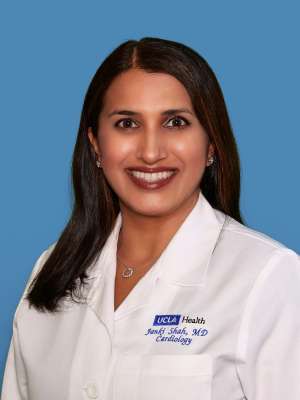
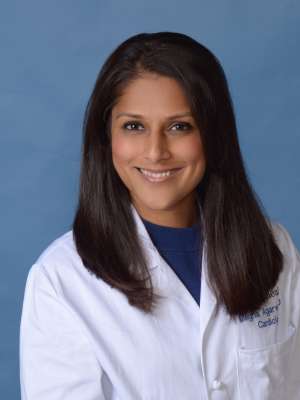
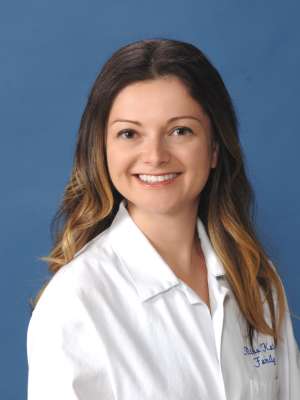
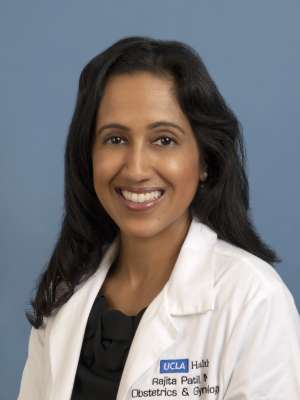
More than 100 community members came out for the event. The panel discussion centered on female-specific risk factors for cardiovascular disease, such as adverse pregnancy outcomes; obesity and the GLP-1 therapies; and menopause as a critical window for cardiovascular screening and disease prevention.
“It was a privilege to serve on the panel alongside Dr. Agarwal, Dr. Patil and Dr. Katsman,” Dr. Shah said. “Our collective messaging was clear: Awareness, early recognition and proactive prevention can significantly change outcomes for women.”
One of the most powerful points of the event was a talk by Zuleyma Santos, a woman who developed a rare but dangerous form of heart failure called peripartum cardiomyopathy following the birth of her daughter in 2019. She now uses a left ventricular assist device (LVAD).
“Her story was both moving and inspiring, and it underscored an important truth: Heart disease can affect women at any age, even during what should be one of the healthiest phases of life,” Dr. Shah said.
Robbie Gluckson, director of market development and community engagement at UCLA Health, has managed many AHA “Breakfasts in Red” over the years. She found this one to be particularly special.
“The room was absolutely captivated by the physicians’ presentations,” Robbie said. “The panel was so impactful for attendees, and I think it was truly one of the best to date.”
Thank you to all for your exceptional work and congratulations on a fantastic event! Photos below.


Healthy Aging at the Heart of Women’s Cardiovascular Center Event
With age comes wisdom — and new cardiovascular risk factors, many of which we are only just beginning to understand for women. To help women learn how they can keep their hearts healthy throughout their life, the UCLA Women’s Cardiovascular Center (WCC) in Westwood on Feb. 22 held “Let’s Talk Healthy Aging in Women: Getting to the Heart of What Matters” at the UCLA Meyer and Rene Luskin Conference Center. The event was part of the annual “Let’s Talk Women’s Heart Health” series, a patient-centered community event that is now in its eleventh year!
“The feedback we get every year from attendees is just phenomenal,” Karol E. Watson, MD, PhD, director of the center, said. “A lot of physicians tell us that we’re sharing great information — that more people need to hear this. That always makes us happy.”

About 175 people turned out for this year’s event, including patients, clinicians and some community members. Seven clinicians gave short, TED-style talks on a wide range of topics, from the blood and imaging tests one should ask for as they get older to the impacts of GLP-1s, hormone therapy and exercise on healthy aging. Past events have featured a panel discussion where physicians take pre-submitted questions, but there were so many audience questions this year that they didn’t have time. Attendees wanted more details on specific imaging and blood tests, the FDA’s recent removal of a black box warning about cardiovascular and breast cancer risks from menopausal hormone therapy products and, of course, GLP-1s.
“There were a lot of questions about how to use GLP-1s — some people are using them off-label, even micro-dosing them,” Dr. Watson said. “They wondered if that made sense, which we agreed it does not. We love questions like that.”
Dr. Watson felt that the most important part of the event were stories from three cardiology patients. One woman shared her experience about how chest pain she nearly shrugged off was found through a coronary computed tomography angiography scan to be linked to severe blockages, which led to surgery and dramatically changed her life. Another talked about the toll her extremely high-stress job takes on her cardiovascular health, despite her working hard to manage risk factors. The third recalled her quintuple bypass surgery and the steps she has since taken to improve her health.
“There were lots of tears,” Dr. Watson said. “It was really meaningful.”
While I am shining a spotlight on the work of the WCC, I would also like to celebrate Dr. Watson’s work as an advocate for heart health and the impact she has on her colleagues, patients and wider community. She takes significant time out of her work to show up and raise awareness for cardiovascular disease, and recently appeared on a panel at the Greater San Fernando Valley Chamber of Commerce’s "Women of Impact” luncheon.
Coleen Wilson, DNP, RN, chief of nursing at the UCLA West Valley Medical Center, was moved by Dr. Watson’s insights on the panel. She has since been using a Teddy Roosevelt quote that Dr. Watson shared — “Nobody cares how much you know until they know how much you care.”
“This is such a critical sentiment in this current social and political environment, and Dr. Watson’s description of the importance of connection with our patients, families, communities, and colleagues really hit home for me,” Coleen said. “Dr. Watson is an exceptional panelist and an outstanding leader. I am thankful for her, her perseverance and her leadership.”
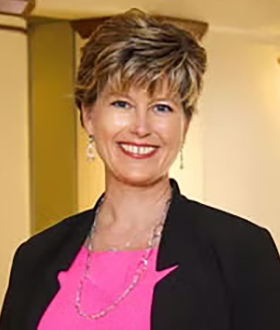
Priscilla Y. Hsue, MD, chief of the cardiology division and one of Dr. Watson’s colleagues, feels similarly.
“I am very much honored to work along with Karol, who is an exceptional role model and leader in cardiology for all of our faculty and trainees,” Dr. Hsue said. “I am grateful for all that she does!"

I share Coleen and Priscilla’s sentiment about Dr. Watson. Please join me in sending a heartfelt thank you to her and to the DoM faculty and staff who have dedicated so much time and energy to advancing the heart health of women in our community!


Dale
P.S.
One of the inspirational women leaders in the DoM, Carol M. Mangione, MD, had a birthday recently, which we celebrated with surprise fireworks at dinner at the recent APM meeting.


Karol (Watson), I promise that the desserts were heart healthy!
Related Posts

This past Friday was one of the most exciting events of the year for our medical students, faculty and the future of our profession: residency match day![...]

Our faculty are prolific writers and make impressive contributions to the scientific and medical literature. Periodically, I devote my blog to highlight recent publications by[...]

From my perch as an administrator, the work of our physicians across the health system sometimes comes down to metrics, numbers and statistics. As useful[...]